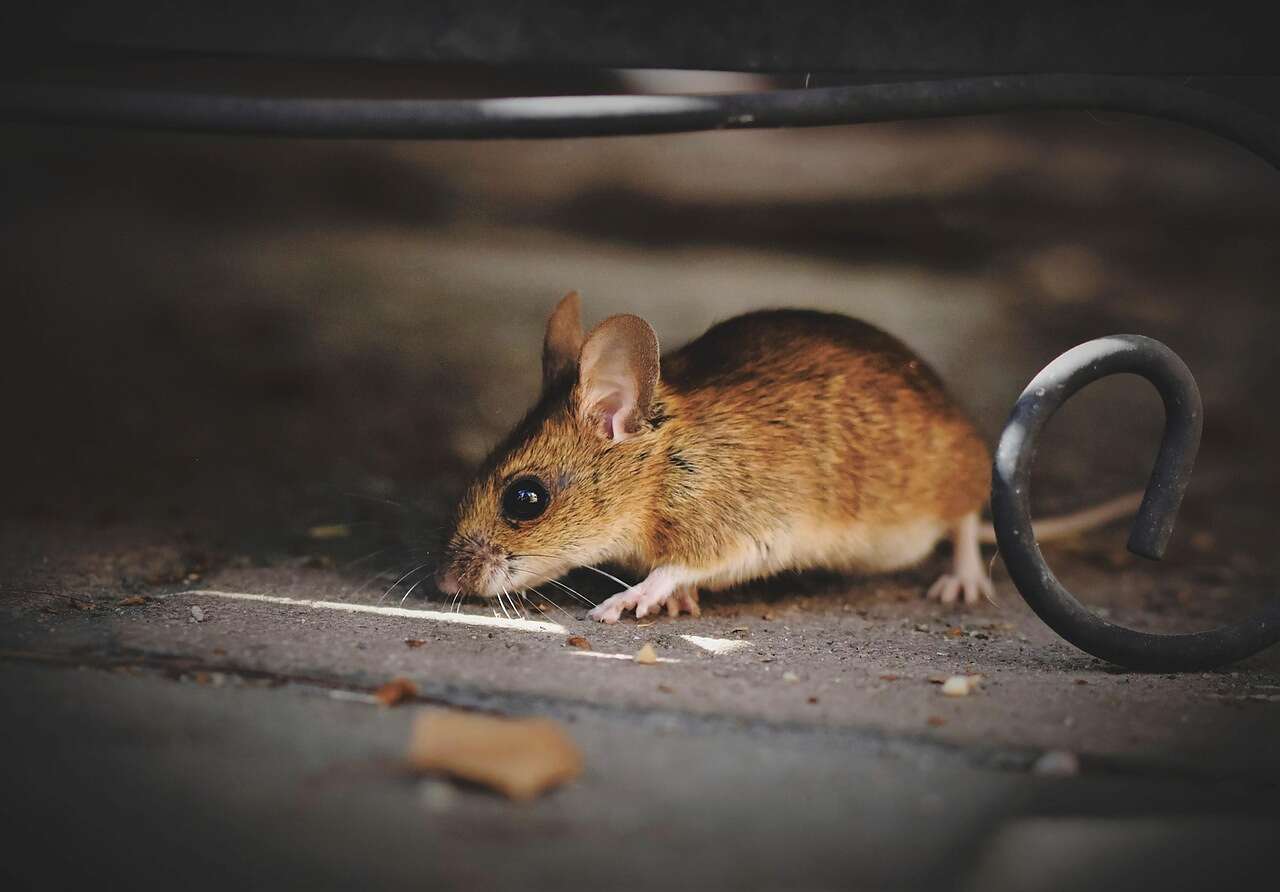
Mouse Removal in Houston, TX
House mice are the most numerous rodent in Houston homes, and they get in through gaps a quarter inch wide at the garage, the brick weeps and the utility lines. The fix is sealing plus trapping, and the inspection is free.
- Quarter-inch sealing standard
- Snap traps over bait indoors
- Free inspection, itemized quote
What mouse removal in Houston includes
Mouse removal in Houston is a ground-level sealing job with trapping run alongside it, because a house mouse lives close to where it eats and gets in through openings a rat could never use. The work starts with a free inspection of the kitchen, the garage, the utility penetrations and the base of the walls, and it ends with a closure list and a quiet pantry.
The scope is smaller in area than a rat job and finer in detail. Whoever attends follows the droppings from the kitchen kick plates and the garage corners back to the wall the mice are using, finds the opening, and closes it with material a mouse cannot chew. Snap traps go along the walls the same day. A return visit confirms the droppings have stopped and closes anything that was held open.
- Inspection of the kitchen, laundry, garage, water heater closet and the outside base of the walls, at no charge
- Species check from the droppings and the location, so a young roof rat is treated as a rat and a field mouse is traced to the yard
- Snap trapping along the runs, checked on a schedule and left in place until the droppings stop
- Sealing of the garage door corners, the AC line set and plumbing penetrations, the dryer vent, the brick weep gaps and the gap under exterior doors (see rodent exclusion)
- Removal of any carcass found in a wall or under an appliance, priced as its own line
- A note on food storage and clutter in the garage, because those decide whether the mice come back
- A written list of every closure with the material used
People tend to apologize for calling about mice, as if the job were too small to bother with. It is a real problem: droppings in the silverware drawer and rustling behind the stove at midnight take the kitchen away from a family, and nobody sleeps well with it going on.

Mouse or rat: telling the two apart in a Houston home
A mouse job and a rat job are sealed in different places, so the first thing settled at the inspection is which animal is in the house. House mice are the most numerous rodent in Houston homes and a smaller share of the paid work, because most of the paid work is roof rats in attics; a mouse call that turns out to be a rat call changes the whole plan.
The house mouse
The house mouse lives indoors year-round and stays within a short range of its food. In Houston it turns up in kitchen cabinets, behind the stove and dishwasher, in the pantry, in the garage where bird seed and pet food are stored, in the water heater closet and inside wall voids that connect the garage to the kitchen. Its droppings are small and dark and collect in the corners of drawers and along the back of countertops. It gets in at ground level through openings a quarter inch wide, which UF/IFAS Extension gives as the gap a mouse can pass.
Deer and field mice
Deer mice and field mice are outdoor species that come inside in the cooler months, from October into the winter, when the subdivisions at the edge of the metro meet open ground. They show up in garages, sheds, detached workshops and the wall cavities nearest the yard, and they leave in spring if the food runs out. Sealing the garage is most of the answer to them.
The young roof rat
A juvenile roof rat is mistaken for a mouse often enough that homeowner threads carry stories of two exterminators disagreeing over the same animal. The tell is location and droppings. Roof rat droppings run a quarter to half an inch long with pointed ends, per UF/IFAS, and they collect in the attic and along the tops of walls; house mouse droppings are smaller and collect where the food is. Noise overhead points to the rat. If the inspection finds rat droppings, the job moves to the rat removal plan, with the roofline sealed.
Signs of mice in a Houston home
The first sign of mice is droppings where food is stored, and the second is the sound of something small behind a cabinet or an appliance after the kitchen goes dark. Mice leave more evidence than rats in a smaller area, so the trail is usually easy to read once someone looks for it.
- Small dark droppings in the corners of drawers, along the back of the counter, under the sink, on the pantry shelves and along the garage walls
- Gnawed corners on cereal boxes, pet food bags, bird seed sacks and the plastic on a bag of rice
- Rustling or light scratching behind the stove, the dishwasher, the refrigerator or inside a kitchen wall after dark
- A nest of shredded paper, insulation or fabric in a drawer that is rarely opened, under an appliance or in a garage cabinet
- A musty odor in a closed pantry or a cabinet under the sink
- Grease marks along a baseboard or a pipe where the animal runs the same route
- Chewed wiring under a dishwasher or behind a dryer, which matters because UF/IFAS notes that rodents chew through wires and can potentially start fires
- A cat or dog sitting in front of the stove or a garage cabinet for no visible reason
Two of those together is enough to book the inspection, and a single dropping in the silverware drawer is enough for most people.
Snap traps, bait and sealing compared for mice
Sealing plus snap trapping is the method that ends a mouse problem in a Houston house, and bait inside the kitchen wall is the method that produces a smell behind the dishwasher two weeks later. The comparison matters because the cheapest plan on the market is a bait station and a monthly visit.
| Method | What it does | Where it fails |
|---|---|---|
| Exclusion (sealing) | Closes every opening a quarter inch or larger at ground level with steel mesh, sheet metal, mortar and door seals, so the mice inside are the last ones | Sealing with mice still inside pushes them deeper into the house; it runs with trapping |
| Snap traps | Kill quickly, give a count, and leave a carcass that can be removed; set in numbers along walls with the trigger toward the wall | Without sealing, new mice replace the caught ones through the same gap |
| Rodenticide bait | Kills over days; the EPA notes most rodenticides are anticoagulants with death typically 4 days to 2 weeks after feeding starts | The mouse dies inside the wall or under the appliance; a risk to pets and children in a kitchen; needs a TDA license to place for hire |
| Glue boards | Catch mice, and are sometimes used under an appliance where a snap trap will not fit | Slow and distressing; a poor primary method |
| Ultrasonic plugs and repellent sprays | Nothing that has been measured | Mice nest behind the outlet the plug is in |
On the sealing side the choice is between steel and foam. Quarter-inch galvanized hardware cloth, sheet metal and mortar stay closed; expanding foam is chewed open in a night and steel wool rusts to nothing in Gulf humidity within a season, so both belong only as a backing behind metal. Brick weep gaps are the special case: the weeps have to stay open to drain the wall, so the right closure is a stainless mesh insert made for the weep hole, which keeps the drainage and blocks the mouse. UF/IFAS gives the point of the trapping in one line: it reduces the risk of a poisoned animal dying inside the building.
How long does it usually take to get rid of mice?
A Houston house that is sealed at ground level on the first visit is usually clear of mice within one to two weeks, and a house that only gets traps stays on the trapping calendar for months. HomeGuide puts a small number of animals at 2 to 3 days of trapping and a severe infestation at 1 to 2 months, and mice sit at the fast end of that when the sealing is done.
The timeline on a routed job runs from the inspection. The openings are closed the same day or within a few days of the quote being approved. Snap traps go in along the walls in numbers, because a mouse population is many small animals and one trap catches one. The droppings are the clock: when a fresh sheet of paper under the sink stays clean for several nights, the job is done. A return visit confirms it and finishes any closure that was held.
The long stories are bait-station contracts. The mice keep dying in the wall, the smell keeps arriving, the technician keeps coming, and the gap at the garage door corner is never touched. A plan with no sealing line has no end date on it.
Is it safe to do exclusion before trapping?
Sealing before trapping is safe when the traps go in on the same day the openings close, and it is the wrong order only when the sealing is done and the house is walked away from. A mouse cut off from the garage will chew a new route into the pantry, so the two halves of the job are run together on every job we route.
The sequence looks like this. The inspection finds the opening in use, usually a garage door corner, a gap around the AC line set, a brick weep or an oversized hole where a pipe enters the wall. The openings are closed with metal, with a mouse-sized one-way door left at the main entry when the population is large. Snap traps are set along the walls and under the appliances the same afternoon and checked on a schedule. The one-way door comes out at the return visit and the last gap is closed.
The reverse order, trapping first and sealing later, is what the forums describe as harvesting rodents, because the catch never stops. The rodent inspection page covers how the openings are found before any of this is quoted.
What mouse removal costs in Houston
A mouse job in Houston usually prices at the lower end of the rodent trapping band, which Angi's Houston data puts at $381 to $1,370 with an average of about $831 across rat and mouse work, and the free inspection produces the itemized figure for one house. The bands below are typical-job ranges, confirmed at the inspection, with Houston figures labeled Houston (Angi) and national figures labeled national (HomeGuide 2026).
| Line item | Houston (Angi) | National (HomeGuide 2026) |
|---|---|---|
| Inspection | $100 to $200 elsewhere; free here | $0 to $175; free here |
| Trapping and removal | $381 to $1,370, with mouse jobs toward the low end | $250 to $1,200 |
| Follow-up visits | $50 to $150 each | Included in some quotes; ask |
| Ground-level sealing | $430 to $1,300 for exclusion work | $500 to $2,500 full home |
| Dead rodent removal | Quoted at inspection | $150 to $500 |
What moves a mouse quote is the number of openings and how far the animals have spread. A slab house in Pearland with one chewed garage door seal and droppings confined to the garage is the bottom of the band. A house where the mice have moved through the wall voids into the kitchen, the laundry and an upstairs bathroom, with brick weeps along two walls and three utility penetrations open, is the top, and a carcass in a wall adds a line. A pier-and-beam house inside the Loop adds crawl-space skirting to the sealing. Ask whether the return visit is in the price and whether a monthly plan is bundled into it.
Mouse removal on Houston housing stock
Houston mouse jobs are shaped by the garage, the brick and the season more than by the attic, because the house mouse works at ground level and the roof rat has the attic. The house type still decides where the sealing goes.
Slab homes and the brick veneer
Most post-1970 houses in Spring Branch, Memorial, Katy, Sugar Land, Pearland, Cypress and The Woodlands are slab-on-grade with brick veneer, and the mouse openings are the weep gaps in the brick, the gap between the veneer and the wall sheathing, the garage door corners, the AC line set and the plumbing and cable penetrations. The garage is the usual first room, because it holds the bird seed and the pet food and its door seal is the most chewed part of the house. The Cypress and Katy pages cover the suburban stock.
Pier-and-beam houses inside the Loop
The pre-1970 bungalows of the Heights, Montrose, Garden Oaks, Oak Forest and Eastwood sit on piers with open crawl spaces, and mice come up through the floor at plumbing penetrations and gaps in the subfloor, or in through the skirting. On those houses the sealing includes the crawl-space skirting and the floor penetrations under the kitchen and bathrooms.
Season, humidity and flooding
House mice breed indoors all year in Houston's mild winters, so there is no off season for them. Calls still rise from October to December when night temperatures drop, and that is when deer and field mice move in from open ground. Humidity around 73 percent on average keeps damp corners damp, which is why a garage cabinet or a pantry with a slow leak is the first place a nest appears. Flooding pushes mice out of low harborage into garages and the lower walls of a house, and the CDC has seen leptospirosis cases climb after hurricanes and floods, lists rodents among the carriers, and advises rodent control once the water goes down. A post-storm rodent inspection covers the weeks after a flood.
Licensing in Texas
Controlling mice for hire falls under the Texas Department of Agriculture, Structural Pest Control Service, and the pest control license category names rats and mice specifically. A business needs a TDA license with a TPCL number on its vehicles and a certified applicator. Live-trapping only, with no bait, has been exempt from the license since June 2009 under Occupations Code Sec. 1951.058, and anyone who places rodenticide bait needs the license. Every contractor we route holds the TDA license the job needs. TDA's consumer flyer on rodent control tells homeowners to ask for credentials and check the license status before signing a contract.
What to check on the contractor before a mouse job starts
A mouse removal quote should carry a TPCL number if any bait is on the plan, separate lines for sealing, trapping and follow-ups, a stated number of return visits and a warranty term to ask about, and a quote that is one number with a monthly fee attached is the one to compare against. Ask before anyone sets a trap.
- Ask for the TPCL number and confirm it with the Texas Department of Agriculture before work starts.
- Ask which openings were found and whether each one is on the quote with a material beside it. Steel mesh, sheet metal, mortar and weep inserts are the answer.
- Ask how many follow-up visits are included; Houston follow-ups run $50 to $150 each in Angi's data.
- Ask what the warranty on the sealing covers, how long it runs, whether it renews and what happens if mice come back inside the term. Get the answer in writing.
- Ask whether a monthly monitoring plan is folded into the price, and what it covers.
- Ask whether bait will be used anywhere inside the house, and where.
The about page explains what the routed contractors are expected to put in writing, and the contact page has the line and the form. The phone is answered 24 hours a day.
Services that usually go with this one
Most Houston jobs run as a sequence, and these pages describe the steps on either side of this one.
- Rodent Exclusion: Closing the roofline, brick weeps, vent boots and crawl-space skirting in steel and metal.
- Rat Removal: Trapping roof rats out of the attic and Norway rats out of the crawl space, sequenced with sealing.
- Rodent Inspection: A free walk of the roofline, attic, crawl space and yard that ends in a written, itemized report.
How the pieces fit together is covered on the about page, or by phone at any hour.
Getting ahead of a mouse problem
Why speed matters with a breeding population.

Video: The best way to get rid of mice quickly, from Clay's DIY Pest Control.
How a mouse removal job runs in Houston
The ground-level sealing is the spine of the job, and the trapping and the return visit hang off it.
-
Free inspection at ground level
Whoever attends follows the droppings from the kitchen and the garage to the wall in use, checks every penetration and door seal, and comes back with the openings and the quote in separate lines.
-
Seal the openings
Garage door corners, the AC line set, pipe and cable penetrations, brick weeps and crawl-space gaps are closed with steel mesh, sheet metal, mortar and weep inserts, measured against a quarter inch.
-
Trap along the walls
Snap traps go in along the runs and under the appliances the same day, in numbers, and stay until the droppings stop. Bait inside the kitchen is off the plan.
-
Return visit and record
The paper under the sink is checked, any one-way door comes out, the last gap is closed, and you receive a closure list with the material at each opening.

Why Houston homeowners route mouse removal through us
Three things separate a mouse job that ends from one that becomes a monthly bill.
-
Sealed to the mouse standard, a quarter inch
The contractor we route closes every ground-level opening a quarter inch or larger, which is the gap UF/IFAS Extension gives as the one a mouse can pass, and does it in galvanized hardware cloth, sheet metal and mortar with stainless inserts at the brick weeps so the wall still drains. Foam and steel wool are backing at most. On a Houston slab house that means the garage door corners, the line set, the penetrations and the weeps get metal, and the closure list names the material at each one.
UF/IFAS: a mouse passes a quarter-inch opening; a quarter inch is the rat-proofing standard
-
Snap traps in the kitchen, no bait in the wall
Mice on a routed Houston job are snap trapped so the carcass leaves the house. The EPA notes that most rodenticides are anticoagulants and that death typically arrives 4 days to 2 weeks after the animal begins feeding, and a mouse that eats bait in a garage dies inside the kitchen wall it lives in. UF/IFAS makes the same point: trapping reduces the risk of a poisoned animal dying inside a building. Keeping bait out of a house with children and pets is the other half of the reason.
EPA: most rodenticides are anticoagulants; death follows 4 days to 2 weeks after feeding begins
-
Priced at the low end, in separate lines
Rodent trapping in Houston runs $381 to $1,370 in Angi's Houston data and a mouse job usually sits toward the bottom of that band, with the sealing, the trapping, the follow-ups and any carcass removal on separate lines so the quote can be compared with another bid. The inspection that produces it is free, where a standalone inspection costs $100 to $200 elsewhere in the city. A monthly bait plan looks cheaper on the first invoice and costs more by the second season.
Angi Houston: rodent trapping and removal $381 to $1,370; follow-ups $50 to $150
What Reddit Says About Mouse Removal in Houston
Mouse threads on r/pestcontrol, r/HomeMaintenance and r/homeowners are full of people who have been trapping for weeks and want to know why it has not stopped, and the answer they get from each other is the same every time: the hole is still open. The vetting advice follows from that. Get more than one bid for the same scope, ask whether the company seals or only traps, insist that the sealing is a separate line from the trapping, and prefer a local operator who will show you the openings over a national brand that sends a technician with a bait station.
The red flags are consistent. A bait-only plan with a monthly fee and nothing sealed is the most criticized thing in the corpus. The line that poison makes the animal thirsty so it goes outside to die is called a myth and the people who use it are treated as dishonest. Quotes that bundle a long monitoring contract into the removal price draw warnings, as do companies that keep returning for months with nothing changing. People also warn about the reverse mistake, sealing a house with animals still inside and then hearing them in a new wall.
The questions they tell each other to ask are short. What exactly is included, and what is a separate line? Is the sealing warrantied, and does the warranty renew? How many follow-up visits are included? What happens if they come back? Will you deal with a dead one in the wall? Entry-point education lands well in these threads; people are surprised by how small a mouse opening is and go looking for gaps at the garage door and around pipes once someone points them there.
The register is quieter than the rat threads and the same underneath: people who cannot sleep for the rustling behind the headboard wall, and who have been told by a partner or a friend that it is only a mouse.
The contractors we route quote the sealing as its own line, show the openings, keep bait out of the kitchen and answer the warranty question in writing before the work starts.
A common mouse removal call from a Houston suburb
The situation: A family in a two-story brick slab house in Cypress starts finding droppings in the pantry and the silverware drawer in early December, a week after the first cold front. The garage holds a forty-pound bag of dog food and a sack of bird seed, both with chewed corners. A previous company put a bait station in the garage and left; a smell arrived behind the dishwasher ten days later and the droppings in the pantry kept coming. The parents have stopped letting the kids eat anything from the lower shelves.
What gets done: Whoever attends traces the droppings from the pantry through the wall void shared with the garage and finds the garage door bottom seal chewed at the corner nearest the driveway, an oversized hole where the AC line set enters the wall, and a run of open brick weeps along the garage wall with rub marks at two of them. The seal is replaced, the line set hole is packed with mortar around a metal collar, and stainless inserts go into the weeps along that wall. Snap traps go along the garage walls, under the dishwasher and along the back of the pantry the same afternoon. The carcass from the bait station is located under the dishwasher and removed as its own line. The dog food and the bird seed go into metal cans on the spot.
How it turns out: The traps take seven mice in the first five nights and two more over the following week, then nothing. A sheet of paper under the pantry shelf stays clean for a week, the return visit confirms it, and the family receives a closure list naming the seal, the line set and the weeps with the material at each. The smell left with the carcass.
Mouse removal questions from Houston homeowners
The questions below come from the phone line and from homeowner threads about mice.
The animal and the risk
Are mice in the kitchen a health risk?
Mice in a kitchen are a health concern because of where they leave droppings and urine. Rodents, the CDC says, carry a range of diseases that pass directly through urine, droppings, saliva and bites, and indirectly through the fleas, ticks and mites that have fed on an infected animal. Food that mice have reached should be discarded, surfaces should be cleaned with disinfectant, and dry droppings should be wetted before wiping so nothing goes airborne. Hantavirus is a question people raise; most US cases are western and the risk from house mice in a Houston kitchen is low.
How do I know it is a mouse and not a rat?
Location and droppings settle it. Mice work at ground level where the food is: the pantry, the kitchen drawers, behind the stove, the garage. Rats in Houston are usually overhead, and roof rat droppings run a quarter to half an inch long with pointed ends, per UF/IFAS, and collect along attic joists. Small droppings in a drawer with rustling behind a cabinet is a mouse job. Running in the ceiling at night is a rat job, even if the droppings found downstairs look small, because juveniles come down to feed. The free inspection makes the call before anything is quoted.
Why do the mice come back every winter?
They come back because the opening they used last year is still open, and because Houston's mild winters keep the outdoor population alive for another season. Deer and field mice move toward houses when night temperatures fall in October to December, and the same garage door corner or brick weep admits them each time. House mice that were trapped without sealing are replaced by the next family from the yard. Sealing the ground level to a quarter inch, with stainless inserts at the weeps and a new garage seal, is what breaks the pattern.
The job and the cost
Can I just handle mice myself with traps from the hardware store?
A homeowner can catch mice with snap traps set in numbers along the walls, trigger toward the wall, and can close a lot at ground level with quarter-inch hardware cloth, mortar and a new garage door seal. The part that calls for a contractor is finding the opening that is in use, which is often a brick weep or a hole behind a fixed appliance, and doing the sealing so it holds in the humidity. Where the trapping has gone on for more than two weeks with fresh droppings still appearing, the gap has not been found, and the free inspection is the shortest route to it.
Will you seal the brick weep holes, and does that hurt the wall?
The weeps are sealed with stainless mesh inserts made for the purpose, and the wall keeps draining. Weep holes exist to let water out from behind the brick veneer, so filling them with mortar or foam causes a moisture problem and is the wrong repair. The insert blocks a mouse and passes water and air. The contractor we route treats the weeps along any wall with rub marks or droppings, and lists each run on the closure list. Ask any other bidder how they intend to close the weeps before accepting a quote that says foam.
How quickly can someone come out for mice?
The phone is answered 24 hours a day and the free inspection is booked at the first call. Availability depends on the contractor routed to the job and on the season, with October to December the busiest stretch in Houston. The same night, a homeowner can move all dry food in the pantry into sealed containers, put pet food and bird seed in metal cans, note where droppings appear, and set a few snap traps along the garage wall. All of that shortens the inspection and starts the count.
Still have a question? Call (713) 804-8785 and ask.