
Rodent Removal in Pasadena, TX
Pasadena runs from the Ship Channel down to the edge of Clear Lake, and the rats follow the same line: bayou banks, rail spurs and drainage ditches on the north side, greenbelts and fence lines on the south. The free inspection finds the opening.
- Free roof and attic inspection
- TDA-licensed contractors on every job
- Phone answered around the clock
Free Inspection in Pasadena
The free inspection on a Pasadena house starts at the roofline and ends at the slab edge, because the old north-side cottages and the newer south-side subdivisions fail in different places. Whoever attends walks the composition shingle roof for cracked pipe boots and split vent bases, checks the soffit-to-brick joint, the garage door corners and every line that enters the wall, then goes into the attic with a flashlight to read droppings, gnaw marks and runs pressed into the insulation. The result is an itemized quote with trapping, sealing and cleanup on separate lines. Pasadena is a Harris County city on Houston's southeast side, roughly 15 miles from downtown along Texas 225 or the Gulf Freeway, and the whole city sits inside the service area.
Someone answers (713) 804-8785 at any hour. Scratching in a bedroom ceiling that only one person in the house seems to hear is a normal reason to call, and so is a chewed bag of dog food in the garage. Book a free inspection and we work out what has happened.
Pasadena's refinery-era cottages and its newer subdivisions get rats in different ways
Pasadena was laid out in 1895 by J.H. Burnett on the south bank of Buffalo Bayou, the stretch that became the Houston Ship Channel, and the Texas State Historical Association records that Sinclair, Texaco and Crown all had refineries in the area by 1920. The city grew fast after the Second World War on petrochemical work, and the housing shows it. The blocks north of Southmore and around the old townsite hold small frame and brick cottages from the 1940s through the 1960s, many raised a little on piers with skirting, low-pitched roofs, open soffits and mature trees planted when the streets were new. A house like that gives a Norway rat a way under the floor and a roof rat a way onto the eave from the nearest limb, and the fix has to cover both ends.
South of Fairmont Parkway toward Clear Lake the housing is decades younger: brick veneer over a slab, vented shingle roofs, attached garages and detention ponds behind the fence lines. With no crawl space the openings move up. Rubber pipe boots split in the Gulf sun, plastic turbine and mushroom vent bases crack, the soffit meets the brick with a gap that was never closed, and the weep gaps along the bottom course of brick are wide enough on their own; University of Florida extension guidance sets the rat-proofing standard at a quarter inch. The rodent exclusion page separates crawl-space sealing from roofline sealing, and a Pasadena quote should say which one it is.
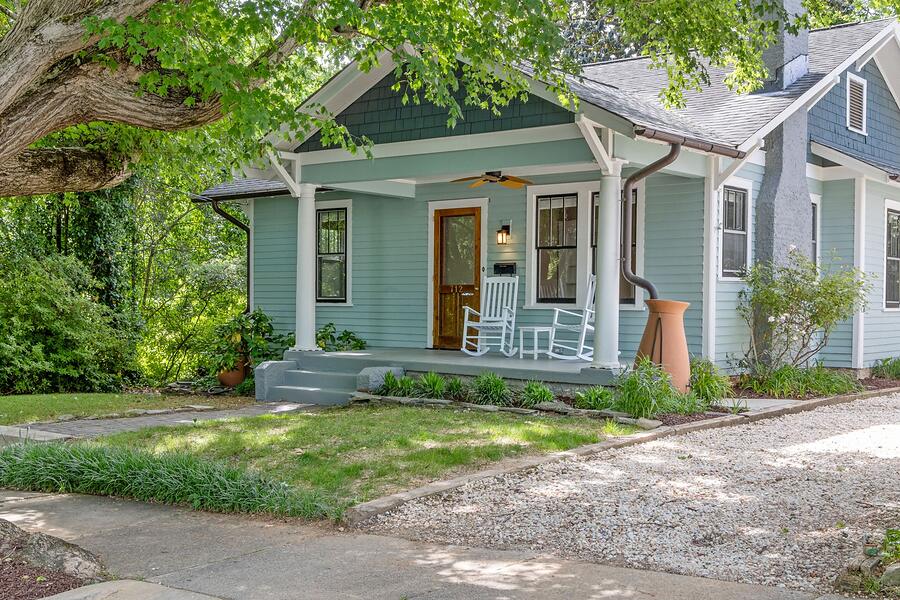
Bayou banks and the Ship Channel edge keep the rat population fed
Pasadena sits between the Ship Channel on the north and the Clear Lake area on the south, with Armand Bayou running down its eastern flank and the Armand Bayou Nature Center, a preserve of several thousand acres, at the far end of it. Between those two waters the city is crossed by drainage ditches, rail spurs, tank-farm fence lines and the grassy margins of industrial lots, and every one of them is rodent harborage. Norway rats burrow in the banks and along slab edges near water; roof rats work the tree lines and fence tops. UF/IFAS describes the roof rat ranging about 150 yards from its den, so a house a block from a ditch or a greenbelt is inside the range.
When the water rises everything moves uphill. Britannica notes that Pasadena has flooded in the past and that buyers should check a property's flood risk, and after Hurricane Harvey in 2017 Houston-area pest firms reported to local news that rodents moved into attics across the region. The Centers for Disease Control links rises in leptospirosis to hurricanes and floods, lists rodents among the animals that carry it, and names rodent control as a step to take afterward. The post-storm rodent inspection covers a Pasadena house that has taken water or lost part of a roof to wind.
What We Handle in Pasadena
Pasadena work splits between crawl-space and roofline sealing on the older north-side cottages and roofline-only sealing on the slab subdivisions to the south, with trapping alongside and cleanup where a nest has been active for a season. A Pasadena call turns into one or more of these.
- Rat removal: roof rats over the ceiling and Norway rats along a ditch bank or under a raised cottage, trapped on the runs and sealed out
- Mouse removal: house mice in a garage or pantry, most common once the nights cool in late fall
- Rodent exclusion: hardware cloth and sheet metal at vent bases, pipe boots, the soffit line, weep gaps and skirting
- Rodent inspection: the free walk that produces the itemized quote
- Attic cleanup: soiled insulation out and the attic sanitized after a long infestation
- Commercial rodent control: restaurants, shops and warehouses along Spencer Highway, Fairmont Parkway and the industrial corridor
- Dead rodent removal: finding and removing a carcass in a wall after bait was used
A Typical Pasadena Job
The situation: A couple in a 1950s brick cottage a few blocks off Southmore hear a steady gnawing behind the kitchen wall for a week, then find droppings on the shelf under the sink. A neighbor put out bait a month earlier and the smell in the hall closet has just started. She has moved to the couch; he thinks the noise is the water heater.
What gets done: The inspection finds an open gap in the skirting where a cable enters under the floor, a rotted corner on the crawl-space access door, and above that a soffit that stops short of the brick along the back eave, with a pecan limb resting on the roof. The skirting gap and the soffit line are closed with galvanized hardware cloth, the access door is rebuilt, the limb is cut back off the roof, and snap traps go on the runs in the crawl space and the attic. The carcass in the closet wall is located by smell and removed through a small drywall cut that is patched the same visit.
How it turns out: Three rats come out of the crawl space in the first week and the wall goes silent. The return visit finds no fresh droppings and no gnawing at the closures, and the couple has a one-page list of the four openings and what each was closed with. The smell is gone with the carcass, and the couch is a couch again.
What This Costs in Pasadena
Angi's Houston cost figures cover Pasadena and put a typical rat job near $831, with most homeowners paying between $381 and $1,370; the table shows those bands beside HomeGuide's 2026 national figures, and the free inspection turns them into a quote for your house.
| Line item | Houston (Angi) | National (HomeGuide 2026) |
|---|---|---|
| Inspection | Free here; $100 to $200 where it is charged | $0 to $175 |
| Trapping and removal | Typical job near $831; $381 to $1,370 for most | $250 to $1,200 |
| Follow-up visits | $50 to $150 each | Included in the job band |
| Exclusion sealing | $430 to $1,300 | $500 to $2,500 for a whole house |
| Attic cleanup and decontamination | Quoted at the inspection | $600 to $2,500 |
| Insulation removal and replacement | Quoted at the inspection | $2.50 to $5.50 per square foot |
| Dead rodent removal | Quoted at the inspection | $150 to $500 |
In Pasadena the age of the house sets the price more than its size. A raised cottage near the old townsite with open skirting and an unfinished soffit needs the whole perimeter closed low and the eaves closed high, and lands at the upper end of the exclusion band. A slab house south of Fairmont with two failed roof seals is a short job near the bottom. Ask for each line separately and ask whether the return visit is inside the number.
What is moving inside the walls
How noise in a wall cavity gets traced.
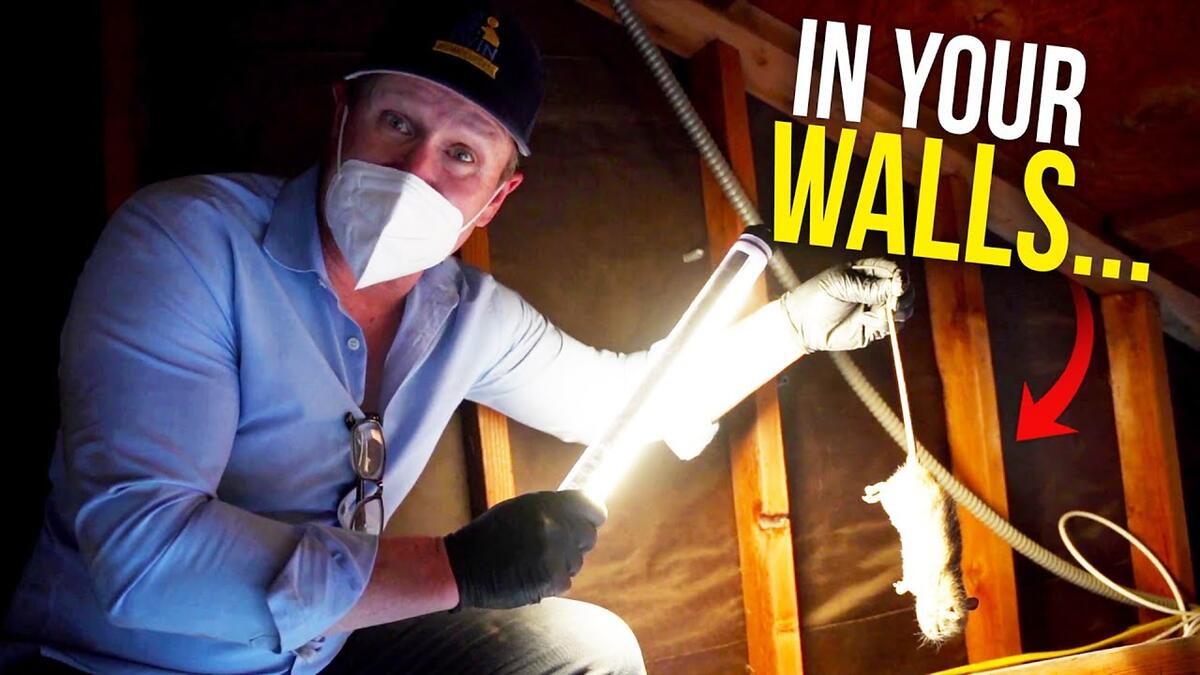
Video: Rodents in your walls? Here's what you do, from Twin Home Experts.
Common Questions in Pasadena
What callers from Pasadena ask before booking.
Getting rid of them
How do I know if it is rats or mice in my Pasadena attic?
Droppings settle it faster than the noise does. UF/IFAS puts roof rat droppings at a quarter to half an inch long, banana shaped with pointed ends; mouse droppings are much smaller, closer to a grain of rice. Rats also leave gnaw marks you can see across a room and greasy rub marks where they squeeze past a joist. Heavy footsteps that cross the ceiling in a line at night are usually a rat; a lighter scratching that stays in one place is more often a mouse in the insulation. The free inspection reads the sign and names the animal before anything is priced.
Can I just put out poison and skip the sealing?
Poison alone is the version of this job that comes back. EPA notes most rodenticides are anticoagulants that take roughly four days to two weeks to kill, so a poisoned rat often dies inside a wall or attic and the household lives with the smell for weeks. UF/IFAS points out that trapping avoids that outcome. And the opening the rat used is still open after it dies, so the next one from the ditch bank or the tree line walks in. Sealing first and trapping what is inside is the sequence that ends it, and the only one worth paying for.
Pasadena houses and contractors
Does living near the refineries or the Ship Channel make rats more likely?
Industrial land gives rodents room, and that is the honest link. Tank-farm margins, rail spurs, ditches and the grassy edges of large lots are burrowing ground for Norway rats and travel lanes for roof rats, and a house a street away is within the distance a rat covers in a night. The plants themselves are fenced and managed. What matters on your side of the fence is whether the roofline and slab edge are closed, and a Pasadena house with sealed vents, closed soffits and screened weep gaps is no easier to enter than one in Katy.
How do I check that a rodent contractor in Pasadena is legitimate?
Ask for the TPCL number and look it up. Any business that controls rats or mice for pay in Harris County needs a business license from the Texas Department of Agriculture's Structural Pest Control Service plus a certified applicator, and the pest control category names rats and mice. The number is displayed on the truck. Texas exempted bait-free live trapping in 2009, and every job that involves rodenticide still needs the license. Every contractor we route holds the TDA license the job calls for, and TDA's own homeowner flyer on rodents says to confirm the license before you sign.
Still have a question? Call (713) 804-8785 and ask.
Nearby Areas We Serve
The same contractors cover the towns around Pasadena, and the service area takes in Harris County along with the rest of the Houston metro.