
Rodent Removal in Montrose
Montrose mixes century-old bungalows on piers with townhomes on slabs, all under oaks planted when the streets were laid out in 1911. Licensed contractors handle every job we route, and the inspection is free.
- Bungalow and townhome sealing
- TDA-licensed contractors on every job
- Answered 24 hours a day
Two kinds of Montrose houses, two kinds of rat entry
Montrose has the widest spread of housing ages inside the Loop, and the rodent work changes with the decade the house was built. The Montrose Addition was platted in September 1911 by J.W. Link's Houston Land Corporation as Houston's first large restricted subdivision, laid out on the south side of Buffalo Bayou with boulevards and esplanades on Lovett, Montrose, Yoakum and Audubon Place. The Neartown area now holds six City of Houston historic districts, and the First Montrose Commons district alone covers houses built from about 1900 to 1941: Craftsman bungalows, Prairie two-stories, Colonial Revival duplexes, most of them raised on pier-and-beam foundations with low-pitched composition-shingle roofs and bracketed eaves.
Beside those houses, and increasingly in place of them, stand the townhomes and small condo buildings that have gone up since the 1990s. The city's own neighborhood description notes that old homes are being demolished for contemporary houses and multi-unit buildings. Those are slab-on-grade, three stories, brick or stucco veneer, with a garage on the ground floor and a roof deck or a low hip roof on top. There is no crawl space to seal. The entry points move to the soffit-to-brick joint, the weep gaps at the base of the veneer, the garage door corners, the rooftop AC line set and the plumbing stacks.
A bungalow on Westheimer and a townhome on Fairview can share a fence and a rat family, with the animal using the crawl space of one and the roof deck of the other. The inspection has to read the house in front of it, and the sealing scope on the quote should say which kind of house it was written for. Montrose is inside the City of Houston and Harris County, and the contractor we route works under the Texas Department of Agriculture license that governs rat and mouse control here.
Oak canopy, Buffalo Bayou and the roof rat
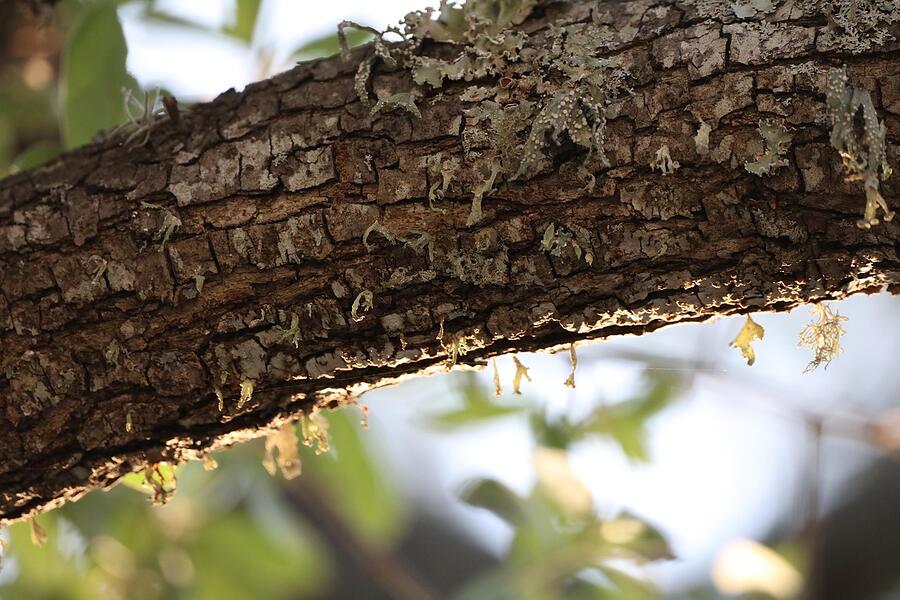
The roof rat is the Montrose attic animal, and the trees that make the neighborhood pleasant are the reason. Edward Teas, who went on to found Teas Nursery, helped plan and plant the original landscaping, and the boulevards were designed around their trees. A century on, the live oaks over Montrose Boulevard and the side streets meet above the pavement, and their limbs rest on porch roofs and second-story eaves. UF/IFAS describes the roof rat as arboreal, a species that moves along branches, wires and trunks and can range about 150 yards from where it dens. In Montrose that range covers the block, the alley and the apartment dumpster behind the restaurant strip.
Buffalo Bayou runs along the north edge of the neighborhood past Allen Parkway and Buffalo Bayou Park, and much of that stretch was left in a natural meandering state with wooded banks. Rats live in it year-round and the corridor connects Montrose to Memorial Park upstream and downtown below. When the bayou rises, that population moves uphill. During Hurricane Harvey in 2017 floodwater covered Allen Parkway and Memorial Drive, and rodents pushed out of the banks and storm drains went looking for dry harborage in the garages and attics south of the park. Houston pest firms reported to local news after Harvey that rodents had moved into attics in numbers they had never seen. The CDC connects leptospirosis case increases to hurricanes and floods, names rodents among the reservoirs, and recommends rodent control after a flood.
Hurricane Beryl in July 2024 was a wind event for Montrose. CenterPoint blamed downed trees and broken limbs for the outages that followed, and a broken limb on a bungalow roof is an open door for the next cool night. After any storm that drops branches on a Montrose street, the roofline is worth a look.
How sealing differs between a bungalow and a townhome
Sealing a Montrose bungalow is a crawl-space job plus a roofline job; sealing a Montrose townhome is a veneer job plus a rooftop job. Both are built to the quarter-inch standard that UF/IFAS gives for rat-proofing, since a mouse fits a quarter-inch gap and a rat a half-inch one.
| House type | Where rats get in | How it is closed |
|---|---|---|
| Pre-war bungalow on piers | Lattice and lap-siding skirt at grade, pipe penetrations under the kitchen and bath, rusted gable vent screens, roof returns, cracked pipe boots, the fascia gap behind the gutter | Quarter-inch galvanized hardware cloth behind the skirt, metal collars at pipes, screened access door, hardware cloth over vents, sheet metal at returns and fascia, new pipe boots |
| Townhome on a slab | Soffit-to-brick joint, weep gaps at the base of the veneer, garage door bottom and side seals, the AC line set and vent stacks on the roof, roof deck door thresholds | Hardware cloth folded into the soffit joint, stainless weep-hole inserts that keep the drainage working, new garage seals, metal collars and sealant at rooftop penetrations |
| Small apartment or condo building | Shared attic or plenum, dumpster enclosure, utility rooms, trash chute | Same materials, with the scope written for the building and the association, which the commercial rodent control page covers |
Trapping runs inside the same day the sealing goes on. Snap traps stay at least a week, because roof rats are wary of new objects, and trapping keeps a poisoned animal from dying inside a wall, per UF/IFAS. Full method detail sits on the rodent exclusion and rat removal pages. Someone who has spent a week hearing something above the bedroom ceiling and being told it is probably the house settling deserves a straight answer about which of those two lists applies to their address, and the free inspection is where they get it.
What to check before a Montrose job starts
The contractor who attends a Montrose job should show a TDA license, itemize the quote and say how many return visits it includes. The Texas Department of Agriculture licenses any business that controls rats and mice for hire, and every contractor we route holds the TDA license the job needs; ask for the TPCL number and confirm it with the Texas Department of Agriculture before work starts, which is what TDA's own consumer flyer on rodent control tells homeowners to do. Live-trap-only work has been exempt since 2009, so a contractor who proposes bait is the one whose license matters most.
On price, Angi's Houston data puts a rat exterminator job at roughly $831 on average, with most jobs between $381 and $1,370, and exclusion at $430 to $1,300. A slab townhome with a short veneer line and two rooftop penetrations sits low in that band. A two-story 1920s house with a full skirt to screen, four vents and a fascia run sits high. Ask whether the number includes the trapping, the return visit and any attic work, and ask what the warranty on the sealing covers and for how long. The contact page is the place for questions before booking.
A representative Montrose roofline closure
A representative exclusion result on a Montrose townhome shows quarter-inch galvanized mesh folded into the soffit-to-brick joint along the full run of the eave, with stainless inserts in the weep gaps below and a metal collar around the AC line set where it enters the wall from the roof. The veneer still drains and the eave still vents. Nothing larger than a quarter inch is left open.
The route in from the sewer line
How a rat travels a drain into a house.

Video: How do rats get out of the sewers and into your home?, from BEEKIND Pest Control.

Why Montrose homeowners route rodent work through us
Three things a Montrose caller can verify before anyone sets a trap.
-
The quote names the house type
A Montrose quote from the contractor we route says whether it was written for a pier-and-beam bungalow or a slab townhome, and lists the closures for that house with the material beside each. Skirting, pipe collars and vent screens on the bungalow; soffit joint, weep inserts, garage seals and rooftop collars on the townhome. Every opening is measured against a quarter inch, the UF/IFAS rat-proofing standard. The homeowner keeps the closure list, and a second bid can be compared against it line by line.
UF/IFAS: rat-proofing standard is a quarter-inch opening
-
TDA license, checkable before work
Rat and mouse control for hire in Texas needs a Texas Department of Agriculture business license and a certified applicator, and the license number travels on the vehicle as a TPCL number. Every contractor we route holds the TDA license the job needs. Ask for the number, and confirm it with the Texas Department of Agriculture before signing anything, exactly as TDA's rodent flyer advises. If a Montrose job turns into squirrel or raccoon work, Texas Parks and Wildlife rules apply as well, and the contractor should say so.
Texas Department of Agriculture, Structural Pest Control Service license (TPCL number)
-
Published Houston bands, free inspection
Most Houston rat exterminator jobs land between $381 and $1,370 in Angi's Houston figures, averaging near $831, with exclusion work at $430 to $1,300. Nationally, HomeGuide's 2026 data puts a standalone inspection at up to $175, and here it is free. The inspection produces an itemized quote with trapping, sealing, follow-up visits and any cleanup on separate lines, which is the only way a Montrose homeowner can tell whether a bundled number from someone else is fair.
Angi Houston: exclusion work $430 to $1,300
A common rodent call from a Montrose townhome
The situation: A renter-turned-owner in a three-story townhome off Westheimer, built on the lot where a bungalow was torn down, hears scratching inside the wall beside the third-floor bedroom at night and finds droppings on the roof deck near the AC unit. A neighbor in the surviving bungalow next door has had rats for two winters and treats it as normal. The owner has started leaving the television on to sleep.
What gets done: The inspection finds the AC line set entering the wall through an oversized hole under the rooftop unit, a chewed corner on the garage door seal, and open weep gaps along the base of the brick veneer on the alley side. Droppings are the pointed roof rat type, and the live oak in the bungalow's yard reaches the townhome's roof deck railing. The contractor we route collars the line set, folds hardware cloth into the soffit joint, fits stainless inserts in the weep gaps, replaces the garage seal, and sets snap traps in the wall access behind the water heater and on the roof deck the same day. The bungalow owner is told what the oak is doing.
How it turns out: Two animals in the first week, then quiet. The return visit finds no fresh sign on the deck or in the wall. The owner receives a closure list naming the line set, the weep gaps, the soffit joint and the garage seal, and the neighbor books an inspection of the bungalow.
Rodent questions from Montrose
Common questions from Montrose bungalow and townhome owners, answered in plain terms.
The house
My townhome is new construction. How are rats getting in?
New construction has no crawl space, so the entries are at the veneer and the roof. The gap between brick veneer and wall sheathing, the weep openings at the base of the brick, the corners of the garage door seal, and the holes cut for the rooftop AC line set and plumbing vents are the usual four. Builders leave weep gaps open on purpose so the wall can drain, and a rat sees them the same way. Stainless weep inserts keep the drainage and close the opening. A roof rat also reaches a roof deck from a neighbor's oak without touching the ground.
Is it safe to do exclusion before trapping in an old bungalow?
It is safe when the two run together and the traps go in the day the openings close. A rat sealed inside a 1920s house with the skirting and roofline shut will chew a new exit, often down into a wall or the kitchen soffit. The sequence on the jobs we route is sealing on the first visit, snap traps on the runs the same day for at least a week, and a return visit to confirm no fresh droppings before the last opening is closed. Sealing with nothing inside addressed, and trapping with nothing sealed, are the two mistakes that keep a house on repeat visits.
The job
What is the cheapest way to get rid of rats?
The cheapest way that stays cheap is sealing plus trapping done once and done properly. Bait stations look inexpensive up front; the EPA notes that most rodenticides are anticoagulants that take four days to two weeks to kill, which in Montrose usually means a dead animal inside a wall and a separate dead rodent removal visit. Trapping alone with nothing sealed becomes a monthly bill. A homeowner can cut the cost by pruning limbs off the roof and replacing a garage seal before the inspection, and the inspection itself is free.
How long will it take?
Sealing is normally a single visit and trapping runs one to two weeks after it. HomeGuide's national figures put a small trapping job at two to three days and a severe infestation at one to two months. A Montrose bungalow that has carried rats through two winters with a neighbor's oak on the roof will run longer than a townhome with one open line set. A return visit closes the job either way, and any attic cleanup is scheduled once the traps stay empty.
Still have a question? Call (713) 804-8785 and ask.