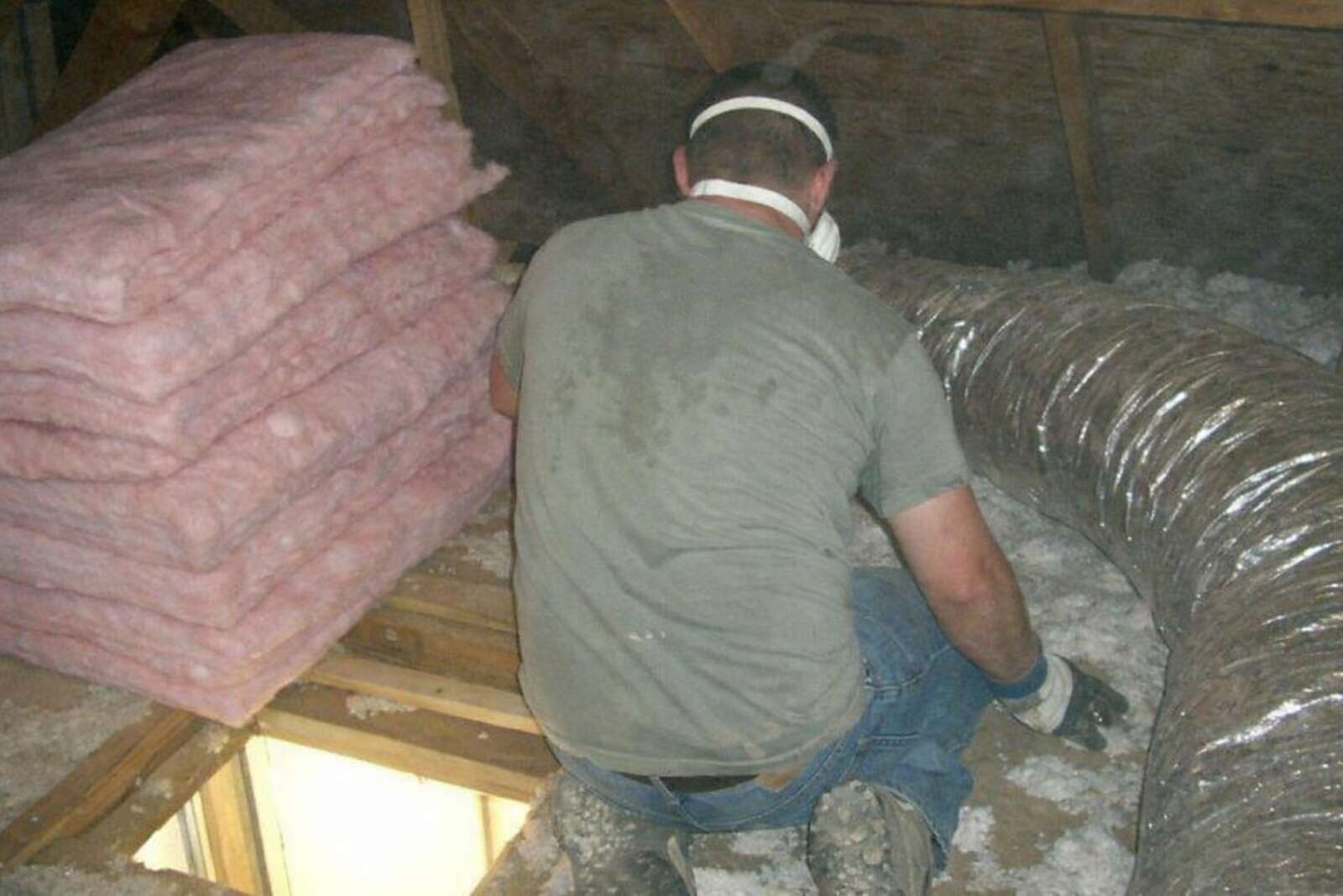
Attic Insulation Replacement in Houston, TX
Attic insulation replacement in Houston takes out insulation that rats have tunneled, soaked and flattened and blows in new fiberglass or cellulose to the right depth, after the roofline is sealed. Every job we route goes to a licensed contractor.
- Blown fiberglass or cellulose
- Radiant barrier checked
- Roofline sealed first
What attic insulation replacement in Houston includes
Attic insulation replacement in Houston is the removal of insulation that rodents have contaminated or compressed, the treatment of the framing underneath, and the installation of new blown fiberglass or cellulose to a specified depth, with the radiant barrier and the attic ventilation checked along the way. It is the last step of a rodent job and it is only worth doing once the roofline has been sealed.
The work follows the attic cleanup. Where the contamination is light the two are one visit; where the cellulose has slumped and soaked the removal is its own day. Whoever attends measures the attic, grades what is there, and quotes the removal and the new fill per square foot on separate lines.
- Removal of the old insulation by insulation vacuum, bagged and hauled, including layered loose-fill in older attics
- HEPA vacuum and disinfectant on the joists and decking before anything new goes in
- Air sealing of the top plates, can lights and plumbing and wiring penetrations into the ceiling below
- Baffles at the soffit vents so the new fill does not block the attic airflow
- New blown fiberglass or cellulose to the depth on the quote, with depth markers left in place
- Radiant barrier checked for chew damage and staining, reattached or replaced where needed
- A written record of the square footage, the material, the installed depth and what was removed
Most people reach this step after weeks of listening to the ceiling and a cleanup that showed them what was up there. New insulation is the piece of the job that makes the attic a room of the house again instead of the place the noise came from.
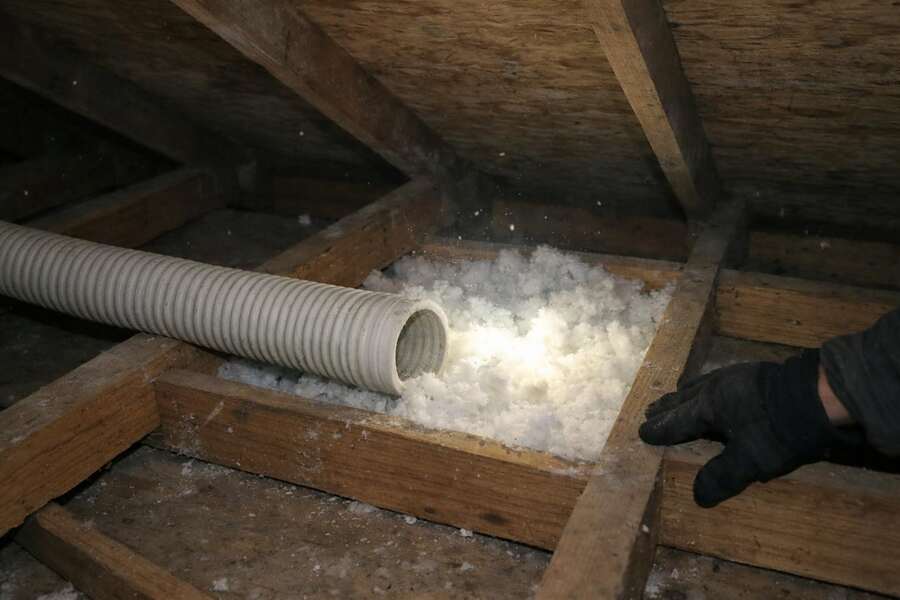
Signs the insulation needs replacing after rodents
Insulation needs replacing when it has been tunneled into runs and nests, soaked with urine, flattened to half its depth, or fouled with droppings across most of the attic, and any one of those on its own is usually enough with cellulose. A flashlight from the hatch shows the first three; the free inspection grades the rest.
What the attic looks like
Flattened trails across blown insulation, mounded nests near the entry points and the furnace platform, dark staining where urine has soaked through, and droppings sitting on top of the fill. UF/IFAS gives roof rat droppings at a quarter to half an inch with pointed ends, and a fouled attic has them in every joist bay.
What the house does
Upstairs rooms that never cool in August, an AC that runs without stopping, a smell that arrives on hot afternoons, and higher summer electric bills than the year before. The Department of Energy notes that compressed insulation does not deliver its rated R-value and that wet insulation performs poorly, and a Houston attic that has been nested in is usually both.
What can be kept
Dry blown fiberglass with light droppings in one area can sometimes be spot cleaned and topped up. Batts that are dry and intact away from the runs can stay. Cellulose that has taken water in Gulf humidity comes out, and so does any insulation with a carcass in it, which the dead rodent removal page covers.
Sealing first, then removal, then the choice of fill
New insulation goes in only after the roofline is sealed, the traps have run their week and the old insulation is out, because fresh fill under an open vent base is nesting material delivered to the door. With that order fixed, the choice is what goes back in, and the table sets the options side by side.
| Option | What it is | How it does in a Houston attic after rodents |
|---|---|---|
| Exclusion first | Every opening at a quarter inch or larger closed with hardware cloth, sheet metal and mortar | Step one. The rodent exclusion page covers each closure. Insulation replaced under an open roofline is replaced again |
| Blown fiberglass | Loose glass fibers blown to depth | Sheds moisture, less attractive nesting than cellulose, easier to spot clean later. The common choice after a rodent job here |
| Blown cellulose | Shredded paper treated with borate, blown to depth | Good coverage and a borate treatment that pests avoid, but it holds moisture in the Gulf air and nests better. Chosen where the homeowner prefers it and the attic is dry and well vented |
| Fiberglass batts | Rolled blankets laid between joists | Gaps at every joist and obstruction; rats run the gaps. Rarely used for a full replacement now |
| Radiant barrier | Reflective foil stapled to the rafters or laid over the fill | Common in Houston attics for the heat. Checked and reattached; it is a heat measure and does nothing against rodents on its own |
| Spray foam at the roof deck | Foam applied to the underside of the roof, making a sealed attic | A different system with its own HVAC and roof implications. Outside the scope of a rodent job; rats chew foam, so it is no substitute for metal at the openings |
Whichever fill goes in, the closures at the roofline are metal. Foam and steel wool are chewed through and rust out; quarter-inch galvanized hardware cloth, sheet metal and mortar are what last on a Houston roof.
What keeps rats away permanently after new insulation goes in?
Metal closures at the roofline keep rats out of new insulation for as long as the metal closures stay in place, and no insulation product, repellent or plug-in device does the same. New fill is an investment in comfort and bills; the sealing is what protects it.
Three habits extend the life of both. Keep live oak and fruit tree limbs cut back from the roof; UF/IFAS calls the roof rat an arboreal animal that travels along branches, wires and trunks and ranges about 150 yards from its den. Walk the roofline after any wind event, since Beryl in July 2024 showed what wind does to a Houston roofline, and a cracked vent base is a door again. Watch the depth markers left in the attic; a trail across fresh fill is the first sign something has found a way back in.
Borate-treated cellulose discourages some insects and is often sold as pest resistant. It is a small help and no barrier. Rats nest in it readily once they are inside, which is why the rat-proofing lives at the roofline and nowhere in the fill.
How long does it take to get rid of rats and get the attic re-insulated?
Most Houston houses go from the free inspection to a re-insulated attic in two to five weeks, with the trapping setting the pace and the insulation itself taking a day. The sealing is done on the first visit, traps stay up a week or more since UF/IFAS finds roof rats suspicious of new objects, a follow-up visit finds no fresh droppings, and then removal and new fill are scheduled.
HomeGuide's figures are two or three days to trap a few animals and one or two months for a severe infestation, so a heavy job stretches the calendar at the front end. The insulation day is the predictable part. A 1,500 square foot attic is emptied in a morning and refilled in an afternoon; a large two-story with layered old loose-fill takes a second day. The homeowner can stay home with the hatch sealed off.
The rat removal page sets out the trapping timeline in more detail, including the reasons bait is a poor fit for a house about to receive new insulation.
What attic insulation replacement costs in Houston
Insulation removal and replacement runs $2.50 to $5.50 per square foot in HomeGuide's 2026 national figures, so a 1,500 square foot Houston attic sits in a band of roughly $3,750 to $8,250 for removal and new fill together, and the free inspection produces the number for a specific attic. Angi's Houston data prices the removal side of the job and is shown for context. All bands are typical-job ranges confirmed at the inspection.
| Line item | Houston (Angi) | National (HomeGuide 2026) |
|---|---|---|
| Insulation removal and replacement | Priced per square foot at the free inspection | $2.50 to $5.50 per sq ft |
| Attic cleanup and decontamination | Priced at the free inspection | $600 to $2,500 |
| Exclusion sealing beforehand | $430 to $1,300 | $500 to $2,500 |
| Rat removal, whole job | $381 to $1,370 for most homeowners; about $831 on average | $250 to $1,200 trapping and removal |
| Follow-up visits | $50 to $150 each | Included in some quotes; ask |
| Full restoration with duct and wiring repair | Priced at the free inspection | $3,000 to $10,000 and up |
Square footage drives the number, then what is being removed, then what is going in. Wet cellulose costs more to take out than dry fiberglass because it is heavier and packs the vacuum. Depth and material set the fill cost, and a deeper fill for the Houston heat sits at the top of the per-foot band. Air sealing, baffles, radiant barrier repair and any duct work are separate lines. Ask for removal and installation as two figures so the per-square-foot rate can be checked against another bid.
Insulation replacement on Houston attics
Insulation replacement in Houston is shaped by the heat, the humidity, the two kinds of house and the vents, and each one changes the material, the depth or the access.
The heat and the humidity
A vented Houston attic under composition shingle runs hot for half the year, which is why radiant barriers are common here and why an under-insulated attic shows up on the electric bill so fast. The air carries an average relative humidity around 73 percent, close to 90 percent at dawn, and roughly 50 inches of rain fall in a typical year. Cellulose that gets wet in that air stays wet, which is the reason fiberglass is the usual fill after a rodent job and the reason wet cellulose comes out instead of being topped up.
Two kinds of attic
The pier-and-beam bungalows of the Heights, Woodland Heights, Montrose and Garden Oaks have low, cut-up attics with knee walls and decades of layered insulation, and removal there is slower and partly by hand. The slab subdivisions of Katy, Cypress, Pearland, Sugar Land and The Woodlands have big open trussed attics where the insulation vacuum and the blower do the work quickly, with long duct runs to check for chew damage. The Garden Oaks and Oak Forest page and the Katy page show the two attics on their own streets.
The vents
Soffit, gable, ridge, mushroom and turbine vents keep a Houston attic from cooking, and new fill has to respect them. Baffles hold the insulation back from the soffit vents, and the vent bases are checked from inside while the attic floor is bare, because a plastic base cracked by the sun is the roof rat's usual door. Anything found is closed with metal before the fill goes in.
Storms and licensing
Flooding pushes animals up into attics, and Houston pest firms reported to local news that rodents moved into attics after Harvey. The CDC connects leptospirosis case rises to hurricanes and flooding and includes rodent control in its post-flood advice. An attic re-insulated after a storm year is worth a roofline walk every hurricane season. The trapping that precedes the insulation work is regulated by the Texas Department of Agriculture, whose Structural Pest Control Service licenses any business controlling rats and mice for hire. Every contractor we route holds the TDA license the job needs, and you can ask for the TPCL number and confirm it with the Texas Department of Agriculture before work starts.
What to ask about the insulation quote
An insulation quote should state the square footage, the material, the installed depth, the removal as a separate figure, and whether the roofline sealing is done and warrantied, and a contractor who cannot put those five things in writing is quoting a number that cannot be compared. Ask before the blower truck is booked.
- Is the roofline sealed, and has the attic been quiet for a week? New fill under an open vent is wasted.
- What is the attic square footage on the quote, and is removal priced per square foot separately from installation?
- What material goes in, blown fiberglass or cellulose, and to what depth? Are depth markers left in place?
- Are air sealing, soffit baffles and radiant barrier repair on the quote or extra?
- Is chewed duct or wiring flagged for another trade or handled on the visit?
- What does the warranty on the sealing cover, how long does it run, and does it renew?
- Which TPCL number covers the trapping on this job?
The about page covers what a routed contractor is asked to confirm in writing, and the contact page has the phone line, answered 24 hours a day.
Services that usually go with this one
Most Houston jobs run as a sequence, and these pages describe the steps on either side of this one.
- Attic Cleanup and Decontamination: Removing droppings, nests and urine-soaked insulation, then sanitizing the attic.
- Rodent Exclusion: Closing the roofline, brick weeps, vent boots and crawl-space skirting in steel and metal.
- Rat Removal: Trapping roof rats out of the attic and Norway rats out of the crawl space, sequenced with sealing.
How the pieces fit together is covered on the about page, or by phone at any hour.
What attic insulation is for
Why the R-value matters in the first place.
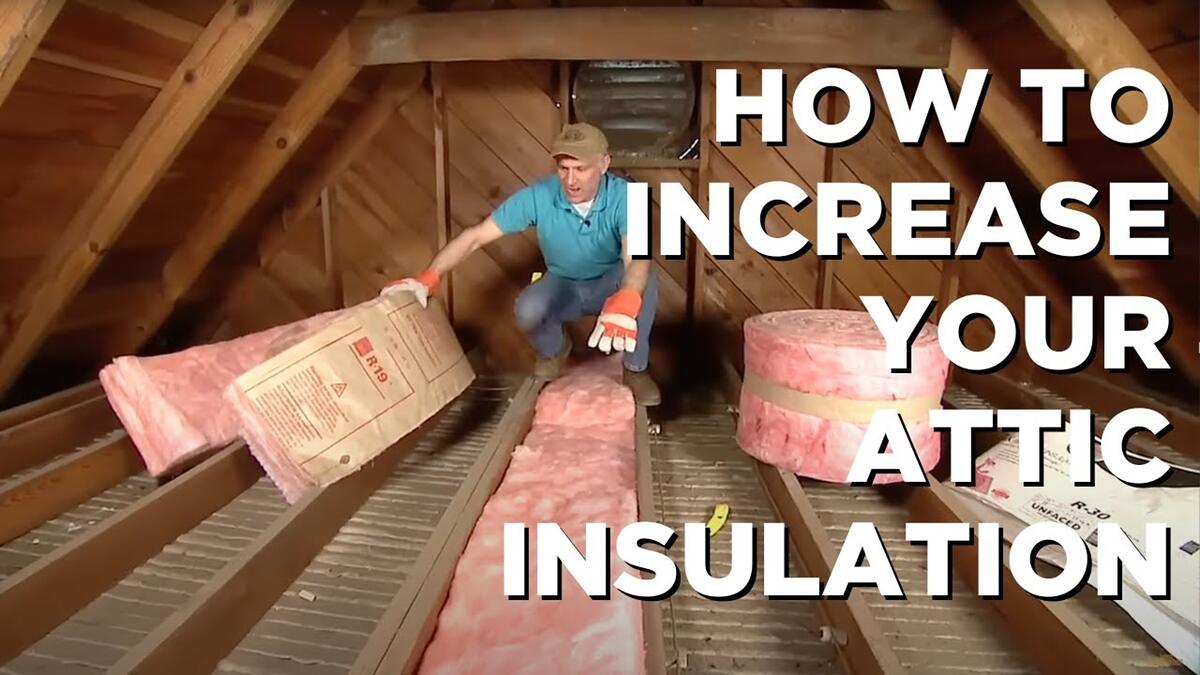
Video: The inexpensive way to up your home's insulation, from Today's Homeowner.
How insulation replacement runs in Houston
The roofline is sealed and the old fill is out before the blower hose comes through the hatch.
-
Seal and confirm quiet
Exclusion closes every opening with metal, traps run at least a week, and a return visit with no fresh droppings clears the attic for the insulation work.
-
Remove and treat
Contaminated insulation goes out through an insulation vacuum to a truck, then joists and decking are HEPA vacuumed and treated with a disinfectant.
-
Air seal and baffle
Top plates, can lights and ceiling penetrations are sealed, baffles go in at the soffit vents, and the vent bases are checked from inside while the floor is bare.
-
Blow in and record
New fiberglass or cellulose goes in to the quoted depth with markers left in place, the radiant barrier is reattached, and you receive a record of square footage, material and depth.
Why Houston homeowners route insulation replacement through us
The fill goes in after the sealing, the material suits the humidity, and the quote separates removal from installation.
-
New fill only under a sealed roofline
The contractor we route will not blow new insulation into an attic with an open pipe boot. Every opening is closed at a quarter inch or larger, the UF/IFAS rat-proofing figure, traps stay a week, and the attic is confirmed quiet before the old fill comes out. Homeowner threads describe attics re-insulated twice because the first company skipped the roofline. The order of the work is what protects the money.
UF/IFAS: quarter-inch rat-proofing figure; traps in place a week or more
-
Material chosen for Gulf humidity
Houston air averages around 73 percent relative humidity, and the Department of Energy notes that wet insulation performs poorly and compressed insulation misses its rated R-value. The contractor we route defaults to blown fiberglass after a rodent job because it sheds moisture and nests less readily, and quotes cellulose where the homeowner prefers it and the attic is dry and well vented. The radiant barrier that Houston attics rely on for the heat is checked and reattached on the same visit.
US Department of Energy: wet insulation performs poorly; compressed insulation does not deliver its rated R-value
-
Removal and installation as two figures
HomeGuide's 2026 figures put insulation removal and replacement at $2.50 to $5.50 per square foot, and the quote you receive splits that into removal, treatment, air sealing and new fill so each can be checked against another bid. The inspection that measures the attic is free. Real quotes in homeowner threads for similar attic work run from under $2,000 to over $20,000 with nothing to explain the gap, and a per-square-foot line is the answer to that.
HomeGuide 2026: insulation removal and replacement $2.50 to $5.50 per sq ft
What Reddit Says About Attic Insulation Replacement in Houston
Homeowner threads on r/HomeImprovement, r/homeowners and r/pestcontrol treat insulation replacement as the line on a rodent quote most likely to be padded, and the advice is to collect multiple bids on the same square footage and to insist that removal, cleanup and new fill are priced separately from trapping and sealing. A bundled number is described as impossible to judge. People ask whether the pest company does the insulation itself or subcontracts it, and prefer local operators to national brands.
The red flags follow from the sequence. A company that offers new insulation while the roofline is still open gets the same criticism as one that traps with no sealing, and the phrase used is that you are buying nesting material for the next rat. Quotes that fold a monthly monitoring plan into the price draw warnings. Pricing varies wildly: posted quotes for comparable work span a few thousand dollars to figures ten times that, and the question underneath is whether the poster is being fleeced.
The questions people pass around: what exactly is included and what is a separate line item; will you clean and decontaminate or only trap; how many return visits the price includes; is the sealing warrantied and does it renew; what happens if they come back. Timelines come up constantly, with two months common and four months with no resolution appearing, which is why people are told to ask how long before the insulation can go in.
Beneath it is the same story as every rodent thread: weeks of broken sleep, the feeling that the house has been invaded, and being told by friends it was nothing until the attic was opened.
The insulation quotes we route put square footage, material, depth and removal on separate lines, after the roofline is sealed.
A typical insulation replacement in Houston
The situation: A homeowner in a 1950s ranch house in Oak Forest, pier-and-beam with a low attic, has had roof rats trapped out after a fall of scratching over the bedroom. The attic holds three layers of insulation from three different decades, the top one cellulose, and the cleanup showed tunnels through all of it and a wet, slumped patch under a cracked plumbing vent boot. The bedroom below has never held temperature in summer. He has one quote for a single figure that does not say what is coming out or going in.
What gets done: The free inspection measures the attic at about 1,400 square feet, finds the vent boot and an open roof return still unsealed, and grades the cellulose as wet and past keeping. The roofline is closed with a metal boot collar and hardware cloth at the return, traps run a week, and the return visit finds nothing new. On the insulation day the crew that attends vacuums all three layers out to the drywall, working by hand around the knee walls, HEPA vacuums and treats the joists, seals the top plates and the old can lights, fits baffles at the soffit vents, and blows in fiberglass to the quoted depth with markers left standing. The old radiant barrier on the rafters is torn near the boot and is patched.
How it turns out: The homeowner receives a record with the square footage, the material, the installed depth and the openings closed, on separate lines he can hold against the single-figure quote. The bedroom holds temperature through the next summer and the attic stays quiet.
Insulation replacement questions from Houston homeowners
These are the questions asked on the phone and in homeowner threads about what goes back into the attic.
What goes in and why
Fiberglass or cellulose after rats: which is better in Houston?
Blown fiberglass is the usual choice after a rodent job in Houston because it sheds moisture, nests less readily and can be spot cleaned if anything gets in later. Cellulose covers well and carries a borate treatment, but it holds water in Gulf humidity and rats tunnel and nest in it readily, which is why so much Houston cleanup is remove-and-replace in the first place. Either fill is fine under a sealed roofline; neither keeps rats out on its own. The choice is on the quote, and the contractor we route will explain the depth for each.
Can the new insulation go on top of the old?
Topping up is only sensible when the old fill is dry, clean and level, which after a rodent infestation is rare. Insulation that has been tunneled, soaked or flattened has lost its loft, and the Department of Energy notes that compressed insulation does not deliver its rated R-value and wet insulation performs poorly, so new fill over it is money laid on a bad base. Droppings and urine left underneath keep the smell and the scent trail. The inspection grades what can stay; a dry fiberglass attic with light contamination in one corner is the case where a top-up works.
Does the radiant barrier need replacing too?
Usually it is checked and reattached; sometimes patches are replaced. A radiant barrier is foil stapled to the rafters or laid over the fill to reflect roof heat, and rats pull it down, chew it near entry points and stain it. Torn sections are patched or restapled while the attic floor is bare, and heavily soiled foil is replaced in sections. It is a heat measure for the Houston summer and does nothing against rodents on its own, so it sits on the quote as its own small line separate from the fill.
Timing and cost
How soon after trapping can the insulation go in?
Once the roofline is sealed, the traps have run at least a week and a return visit turns up no new droppings, the insulation can be scheduled, usually within the following week or two depending on the contractor's calendar. UF/IFAS recommends a week with traps in place since roof rats avoid new objects, and HomeGuide's range runs from a few days for a light job to a month or two for a severe one. Booking the fill before the attic is confirmed quiet is the mistake to avoid. The line is answered 24 hours a day.
Will new insulation lower my electric bill?
An attic restored to its proper depth after rodent damage usually does, because the compressed and wet fill it replaces was underperforming, and a Houston attic under composition shingle is the hottest space in the house from May to October. The Department of Energy gives the mechanism without a number: compressed insulation does not deliver its rated R-value and wet insulation performs poorly. How much a bill changes depends on the house, the AC and the depth installed, so no figure is promised. The record of installed depth is what an energy auditor or a future buyer will want.
Still have a question? Call (713) 804-8785 and ask.