Rodent Removal in Garden Oaks and Oak Forest
Garden Oaks cottages on piers and Oak Forest ranch houses on slabs share one oak and pecan canopy and one bayou, so the sealing scope changes street by street. Licensed contractors handle every job we route, and the inspection is free.
- Crawl-space, roofline and slab-edge sealing
- TDA-licensed contractors on every job
- Answered 24 hours a day
One canopy, two foundations
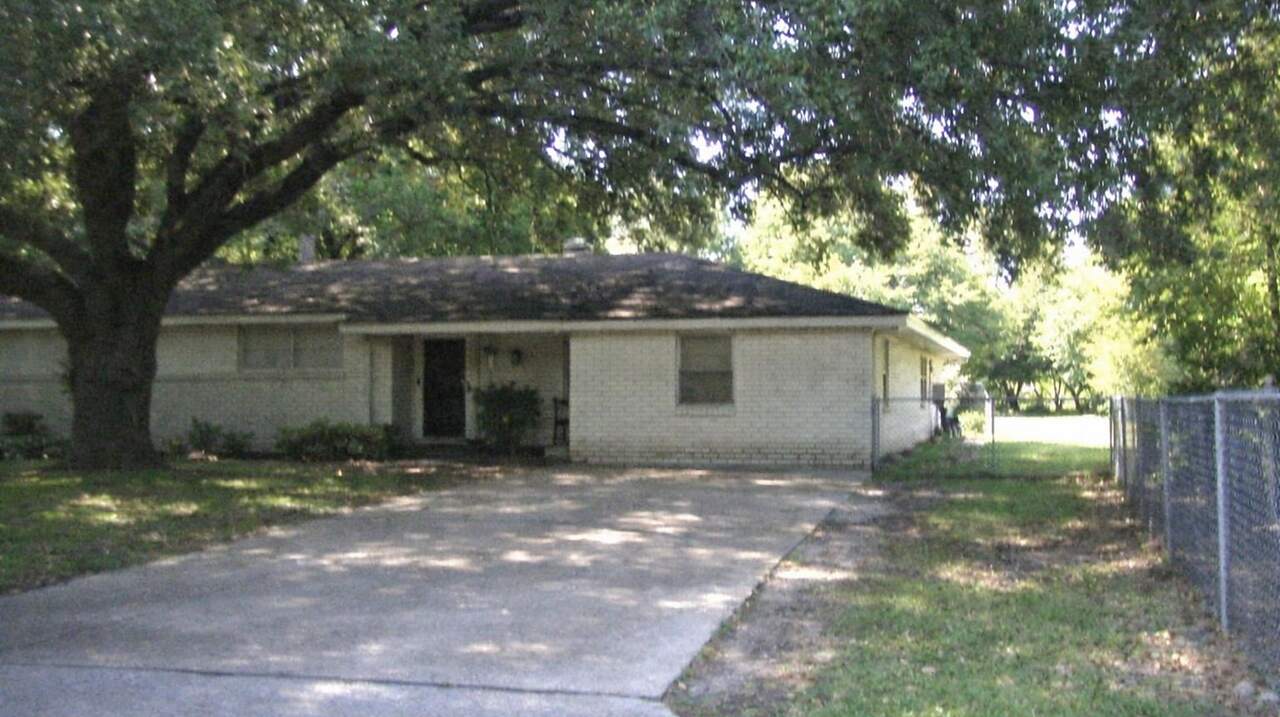
Garden Oaks and Oak Forest were built ten years apart by two different developers, and the ten years changed what sits under the house. Garden Oaks was laid out in 1937 by Edward L. Crain as a garden suburb with curving streets, deed restrictions and a range from cottages to larger homes; Crain was known for ready-cut house kits, and the pre-war cottages and bungalows went up on pier-and-beam foundations with skirted crawl spaces, the same construction as the Heights to the south. Oak Forest followed in 1947, when Frank Sharp's Oak Forest Realty Corporation bought land next to Garden Oaks and put prefabricated ranch houses on about 4,780 lots for returning veterans. Those houses went on concrete slabs. One of the original owners recalled buying her house in April 1947 when it was only a slab, and the low-pitched, single-story ranch on a slab is still the Oak Forest signature.
For rodent work the split is practical. A Garden Oaks cottage can take a Norway rat under the floor through the skirting and a roof rat over the eave from a pecan limb, so the sealing runs on two levels. An Oak Forest ranch has no space under it, so everything happens at the slab edge, the brick or siding line, the garage and the roof. Both neighborhoods have been rebuilding hard: Rice University's Kinder Institute found that nearly 13 percent of Oak Forest properties saw new construction between 2005 and 2015, mostly larger two-story houses on the old lots. Those new houses are slab-on-grade with brick veneer and a vented composition-shingle roof, and they get rats the suburban way, through the soffit-to-brick joint and the weep gaps.
Both neighborhoods sit north of the 610 Loop, inside the City of Houston and inside Harris County, so the contractor we route works under the Texas Department of Agriculture license that covers rat and mouse control in the city.
Oaks, pecans, pines and White Oak Bayou
The trees are the reason the two neighborhoods have their names, and the reason roof rats are the attic species here. Garden Oaks was planted with oaks, pecans and pines from the start, and Oak Forest kept the mature oaks the developer built around. Eighty years on, the canopy over a Garden Oaks lot is continuous from the street to the ridge line, and a pecan drops its crop on the roof every fall. UF/IFAS describes the roof rat as arboreal, an animal that moves along limbs, wires and trunks; a pecan limb resting on a composition-shingle roof is a bridge, and the pecans themselves are a food source at the same height as the attic. Ranch houses in Oak Forest have lower rooflines, which puts the eave within reach of a fence top or a shrub, and the wide overhangs hide the soffit transitions from view.
White Oak Bayou runs along the east side of both neighborhoods and Brickhouse Gully cuts through Oak Forest to meet it. The bayou is a greenway that ties Oak Forest and Garden Oaks to the Heights and downtown, and it is a rodent lane for the same reason: continuous cover, water, and burrowing ground on the banks. Norway rats work the banks and the drainage that feeds them, and a lot backing onto the gully or the T.C. Jester side of the bayou carries more pressure than one in the middle of the subdivision.
Flooding turns that pressure into a rush. White Oak Bayou went well out of its banks during Tropical Storm Allison in 2001, reached a record 45.6 feet during Hurricane Harvey in 2017, and rose past 39 feet during Hurricane Beryl in July 2024. Each time, rats and mice were pushed out of burrows and storm drains toward dry garages and attics on the higher streets. Houston pest firms reported to local news after Harvey that rodents had moved into attics in numbers they had never seen. CDC guidance links leptospirosis increases to hurricanes and floods and treats rodent control as part of the cleanup that follows, which is what a post-storm rodent inspection is for. Someone whose garage took bayou water and who now hears movement in the attic at night is describing a known sequence, and it deserves a straight answer instead of being told it is probably nothing.
Sealing a cottage on piers and a ranch on a slab
The sealing list for a Garden Oaks cottage and the list for an Oak Forest ranch overlap at the roof and diverge everywhere below it. Every opening on either list is closed to a quarter inch, the rat-proofing figure UF/IFAS publishes; a rat needs half an inch and a mouse a quarter.
Garden Oaks cottage on piers
The skirt is the first job: quarter-inch galvanized hardware cloth run behind the lattice or lap siding from grade to sill around the full perimeter, metal collars where the water, gas and drain lines pass through, and a screened, latched access door. The roofline is the second: hardware cloth over gable vents, sheet metal at roof returns and the fascia gap, new rubber pipe boots where the Houston sun has cracked the old ones, and a screened cap on any turbine or mushroom vent with a split seal. Limbs get pruned off the roof.
Oak Forest ranch on a slab
With no crawl space, the perimeter check runs along the slab edge: the gap where siding or brick meets the slab, the weep openings at the base of any brick veneer, the garage door bottom and side seals, and the hole where the AC line set and hose bibs enter. Above, a 1950s ranch has wide soffits with original vents whose screens have rusted, and the soffit-to-brick joint at the top of the veneer is often open along its whole length. Hardware cloth folded into that joint, stainless inserts in the weeps, new garage seals and screened vents close the house. A rebuilt two-story on the same street gets the same list plus a longer roofline.
Trapping runs inside the day the sealing goes on, snap traps left at least a week because roof rats are wary of new objects, which also avoids a poisoned animal dying inside the building, per UF/IFAS. Method detail sits on the rodent exclusion and rat removal pages. When an Oak Forest attic has held rats for a season, the cellulose insulation common in these houses usually has to come out, and the attic insulation replacement page explains why Gulf humidity makes spot cleaning a poor bet.
A representative slab-edge and soffit closure in Oak Forest
A representative exclusion result on an Oak Forest ranch house shows quarter-inch galvanized mesh folded into the soffit-to-brick joint along the front eave, a new screened cover on the original soffit vent, and a metal collar around the AC line set at the slab edge. The brick still drains through stainless weep inserts and the soffit still breathes. Every opening larger than a quarter inch is closed.

Rat holes around a building
What a burrow looks like, and where it leads.
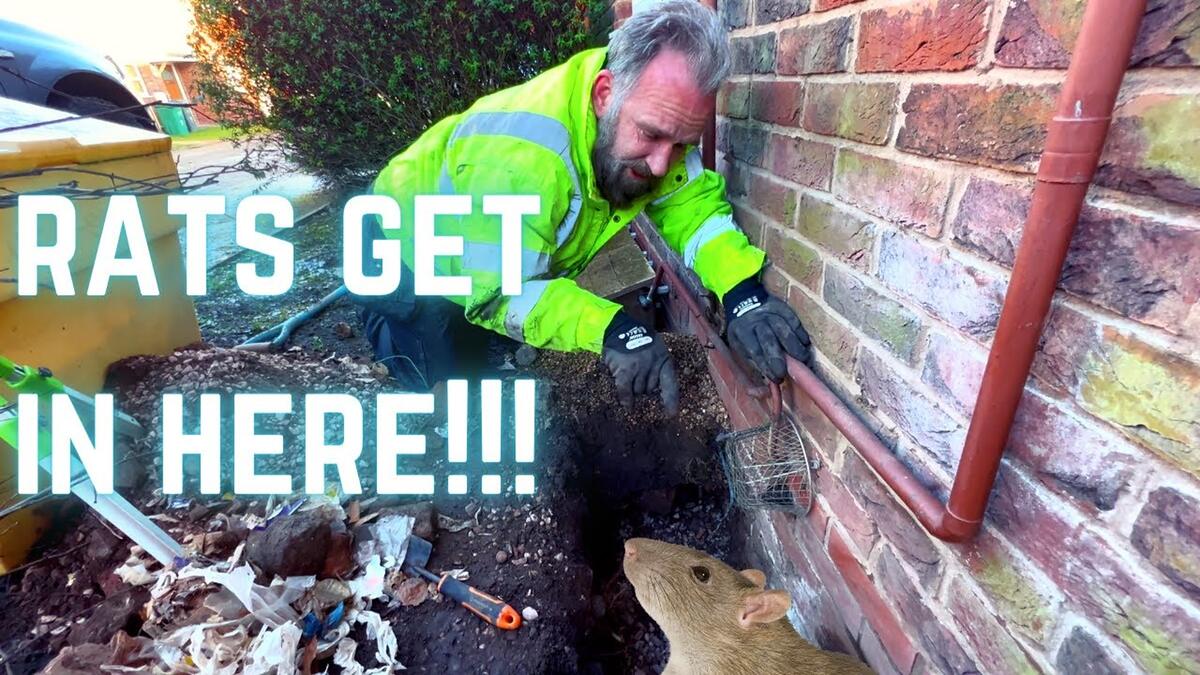
Video: RAT holes around your house? How to stop rats burrowing, from Pest Interceptors.
Why Garden Oaks and Oak Forest homeowners route rodent work through us
Three things a caller from either neighborhood can check before anyone climbs into the attic.
-
The right list for the foundation
Whoever attends writes the sealing scope for the house in front of them: a crawl-space perimeter plus a roofline for a Garden Oaks cottage, a slab edge, veneer line and roofline for an Oak Forest ranch or a rebuilt two-story. Each closure goes on the quote with the material named, and each is measured to the quarter inch UF/IFAS gives as the rat-proofing standard. The homeowner keeps the closure list, which is what a warranty attaches to and what a second contractor can check against.
UF/IFAS: rat-proofing standard is a quarter-inch opening
-
TDA license on the vehicle and the quote
The Texas Department of Agriculture licenses any business that controls rats and mice for hire, and every contractor we route holds the TDA license the job needs, with the TPCL number displayed on the vehicle. Live-trap-only work has been exempt since 2009 under Occupations Code Sec. 1951.058, so the license matters most when anyone proposes bait. Ask for the TPCL number and confirm it with the Texas Department of Agriculture before signing, which is the advice TDA gives on its own rodent control flyer.
Texas Department of Agriculture, Structural Pest Control Service license (TPCL number)
-
Houston bands, itemized at a free inspection
Angi's Houston figures put the average rat exterminator job near $831, with most homeowners paying $381 to $1,370, and exclusion work at $430 to $1,300. HomeGuide's 2026 national data prices attic cleanup and decontamination at $600 to $2,500, which matters in Oak Forest where cellulose attics often need remove-and-replace. Those are typical-job bands; the free inspection turns them into a quote for one house, with trapping, sealing, return visits and any attic work on separate lines.
Angi Houston: rat exterminator jobs average about $831
A typical rodent call from an Oak Forest ranch house
The situation: A family in a 1950s ranch house a few streets from Brickhouse Gully hears something moving across the attic above the hallway every night after the July storm. The garage took a few inches of water during Beryl, and since then there have been droppings on the workbench and a chewed bag of dog food. A pecan in the back yard lost a limb onto the roof in the storm and the limb is still there. The parents have been taking turns lying awake listening for it.
What gets done: The inspection finds the broken pecan limb resting on the roof beside a turbine vent with a split base, the soffit-to-brick joint open along the back eave, a garage door bottom seal torn at one corner, and droppings of two kinds: the blunt Norway rat type on the garage floor and the pointed roof rat type along the attic joists. The contractor we route screens the turbine vent, folds hardware cloth into the soffit joint, replaces the garage seal, collars the AC line set at the slab edge and sets snap traps in the garage and along the attic run the same day. The limb comes off the roof.
How it turns out: Four animals in the first week, then nothing. The return visit finds no fresh sign. The attic holds cellulose that is soaked in one section, so it is removed and replaced with blown fiberglass. The family gets a closure list and a reminder to check the roofline after the next bayou rise.
Rodent questions from Garden Oaks and Oak Forest
Questions from the two neighborhoods, answered for a cottage on piers and a ranch on a slab.
The house
We tore down and rebuilt. Why do we still have rats?
A new house on an old lot keeps the old trees and the old neighbors, and the new construction brings its own openings. Brick veneer has weep gaps at the base by design, the soffit-to-brick joint at the top of the veneer is rarely closed, and the garage and utility penetrations are cut oversized. A roof rat reaches a new roof from the same oak that reached the old one. The sealing on a rebuilt Oak Forest two-story is a roofline and veneer job, and the free inspection walks the full perimeter to find which of those is open.
Do the pecans and oaks have to come down?
No. The trees stay and the limbs come off the roof. UF/IFAS describes roof rats as animals that travel along branches, wires and trunks, so a limb resting on the shingles is the route to close. Prune to a clear gap, pick up fallen pecans in the fall so the crop stops feeding the colony, and seal the roofline so the tree stops mattering. A rat can still travel around 150 yards from its den and climb siding, which is why pruning on its own has never solved a Garden Oaks attic.
The job
Is trapping enough on its own, or do the chewed openings have to be closed straight away?
Trapping without repair is a subscription. The openings that let the first animals in stay open for the next ones, and Houston rodents breed all year with no winter die-off, so the supply is constant. The repairs are the part of the job that ends it. On a Garden Oaks cottage that means the skirt and the roofline; on an Oak Forest slab house the slab edge, the veneer and the soffits. Ask for the sealing as its own line on the quote, with the material named, and ask what the warranty on it covers. Questions before booking go through the contact page.
How long after a flood should I expect rodent problems?
Displaced rats look for dry cover within days, and the attic activity usually starts when the first cool nights arrive after the storm. Bayou floods push animals out of burrows and storm drains and up the slope into garages first, then attics. The CDC recommends rodent control as part of post-flood prevention because of the leptospirosis link. A post-storm inspection of the garage seals, the slab edge and the roofline after any White Oak Bayou rise catches the entries before the fall nesting season fills them.
Still have a question? Call (713) 804-8785 and ask.